Construction Vibration Monitoring: Protecting Structures During Compaction
Dynamic compaction and ground improvement operations generate tremendous forces that transmit vibration through soil, rock, and groundwater. Without proper monitoring, these vibrations can damage adjacent structures, compromise utilities, or create safety hazards. Construction vibration monitoring is the professional safeguard that allows engineers and contractors to optimize ground improvement work while protecting everything around it.
This guide explains how construction vibration monitoring works, why it matters, and how to select the right monitoring system for your project.
Why Vibration Monitoring Matters During Ground Improvement
Ground improvement operations like dynamic compaction create powerful shock waves. These vibrations don’t stay localized. They radiate outward through soil layers, potentially affecting buildings, bridges, pipelines, railways, and sensitive equipment within hundreds of feet. Uncontrolled vibration can cause cracking, settlement, or structural failure.
Construction vibration monitoring transforms this risk into measurable data. Real-time monitoring ensures that compaction work stays within safe parameters while meeting environmental and regulatory compliance requirements.
The Risks of Unmonitored Vibration
Vibration damage occurs gradually and often silently. Minor cracks in masonry can spread into structural compromise. Settlement in nearby foundations can shift building loads unpredictably. Sensitive laboratory or medical equipment can malfunction from vibration exposure. Industrial pipelines and utilities may develop leaks. In urban environments, vibration can disturb residents and trigger regulatory complaints.
The financial and legal consequences are severe. Property damage claims, project delays, regulatory fines, and liability exposure make vibration risk a top concern for contractors and developers.
How Vibration Damage Occurs
Vibration damage depends on three factors: amplitude, frequency, and duration. High-amplitude vibrations (large ground movements) are obviously dangerous. But lower-amplitude vibrations at certain frequencies can be equally damaging over time. A structure resonating at its natural frequency accumulates damage faster than structures experiencing random vibration. Duration matters too. A brief pulse is less harmful than continuous shaking at the same intensity.
Engineers classify vibration using peak particle velocity (PPV), measured in inches per second. PPV represents the fastest ground movement during vibration events. Different structures have different PPV limits. A historic masonry building might tolerate 0.5 inches per second, while modern reinforced structures can handle 2 inches per second or more.
Regulatory and Safety Compliance
Most jurisdictions require vibration monitoring during construction in urban areas or near sensitive structures. Building codes, environmental regulations, and local ordinances specify maximum allowable vibration limits. Failure to monitor and comply can result in work stoppages, fines, and project liability.
Professional vibration monitoring demonstrates compliance. It creates a documented record of vibration levels, confirms that operations stayed within approved limits, and protects contractors from liability claims.
How Vibration Monitoring Works on Construction Sites
Modern construction vibration monitoring is a three-part system: sensor deployment, data collection, and real-time analysis with alert protocols.
Real-Time Data Collection and Analysis
Vibration sensors (accelerometers) detect ground movement and convert it into electrical signals. Data acquisition systems record these signals continuously, often transmitting data wirelessly to a central monitoring station. Software analyzes the data in real-time, calculating peak particle velocity, frequency content, and other metrics. When vibration levels approach or exceed safe thresholds, the system triggers alerts immediately.
This real-time capability is critical. Operators can adjust compaction parameters, reduce impact energy, increase spacing between drops, or halt operations before damage occurs. The feedback loop between monitoring and field operations makes the difference between safe, efficient work and costly accidents.
Sensor Placement and Strategy
Sensor location determines monitoring effectiveness. Experienced vibration monitoring teams place sensors at multiple distances from the compaction zone, typically closer to adjacent structures or sensitive areas. Sensors are positioned at ground level and sometimes at building foundations to capture vibration as it propagates. Arrays of sensors create a spatial picture of vibration patterns.
For dynamic compaction, sensors are typically placed in a pattern radiating from the impact zone. The nearest sensors detect high-energy impacts; distant sensors show how vibration attenuates with distance. This data helps engineers understand soil response and adjust operations to meet project goals while staying within safe limits.
Alert Thresholds and Response Protocols
Before work begins, engineers establish vibration thresholds based on the site, nearby structures, and regulatory requirements. Thresholds might be conservative near historic buildings or sensitive facilities and more relaxed in remote areas. Monitoring systems automatically alert field supervisors when levels approach thresholds.
Response protocols define what happens when alerts trigger. Common responses include reducing drop heights, increasing spacing between compaction points, pausing operations, or halting work. Clear protocols ensure that alerts lead to action, not just data collection.
Key Vibration Monitoring Equipment and Systems
Construction vibration monitoring relies on specialized equipment designed for reliability, accuracy, and field deployment.
Sensors and Accelerometers
Accelerometers measure ground acceleration, the rate of change of ground velocity. They’re typically tri-axial, meaning they measure vibration in three directions simultaneously: vertical, horizontal (two perpendicular directions). This three-dimensional data reveals how ground movement varies by direction, which matters because structures respond differently to vertical versus horizontal shaking.
Modern accelerometers are robust and weatherproof. They survive mud, dust, temperature extremes, and vibration impacts. Typical accuracy is plus or minus 5 to 10 percent, sufficient for engineering decision-making.
Data Acquisition Systems
Data acquisition systems digitize sensor signals and store data at high sampling rates, often 2,000 to 10,000 samples per second. At these rates, systems capture vibration details that would be missed by slower sampling. Wireless transmission allows data to reach central monitoring stations instantly, eliminating wired connections that can be damaged or difficult to manage on crowded job sites.
Battery-powered systems operate independently of site power. Some systems include onboard processing, so alerts and data analysis happen locally without waiting for wireless transmission. This redundancy ensures monitoring continues even if network connections fail.
Software and Remote Monitoring
Specialized software visualizes vibration data in real-time. Operators see live waveforms, frequency spectra, and PPV values on computer screens or mobile devices. Software calculates statistics, logs data for permanent records, and generates reports. Remote monitoring capabilities let project managers and consulting engineers observe conditions from offices or other job sites.
This transparency supports communication with nearby property owners, regulatory agencies, and insurers. Daily or weekly reports document vibration levels, confirm compliance, and demonstrate professional project management.
Vibration Monitoring in Different Ground Improvement Scenarios
Vibration monitoring strategies vary depending on site conditions, proximity to structures, and ground improvement techniques.
Dynamic Compaction Operations
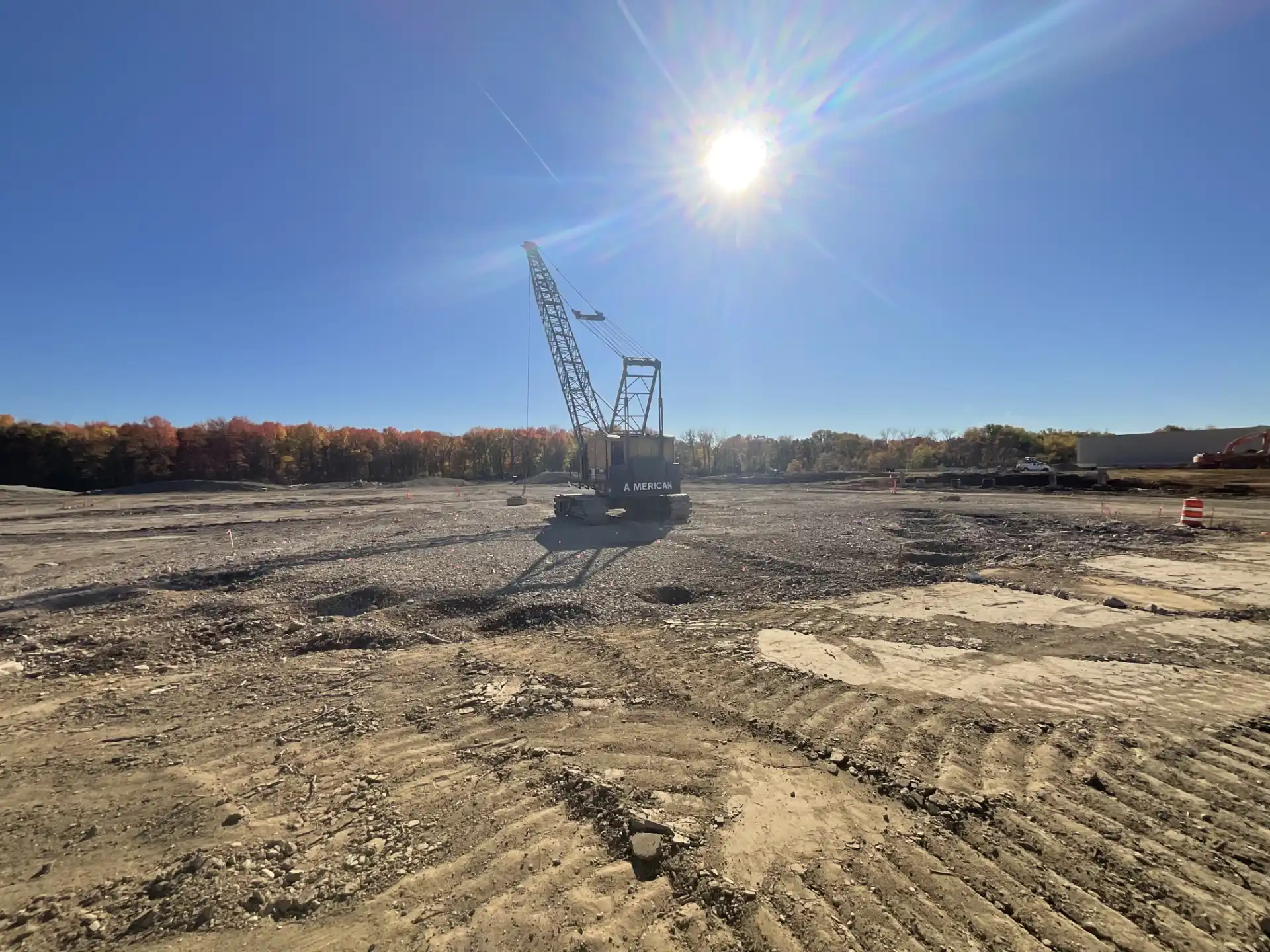
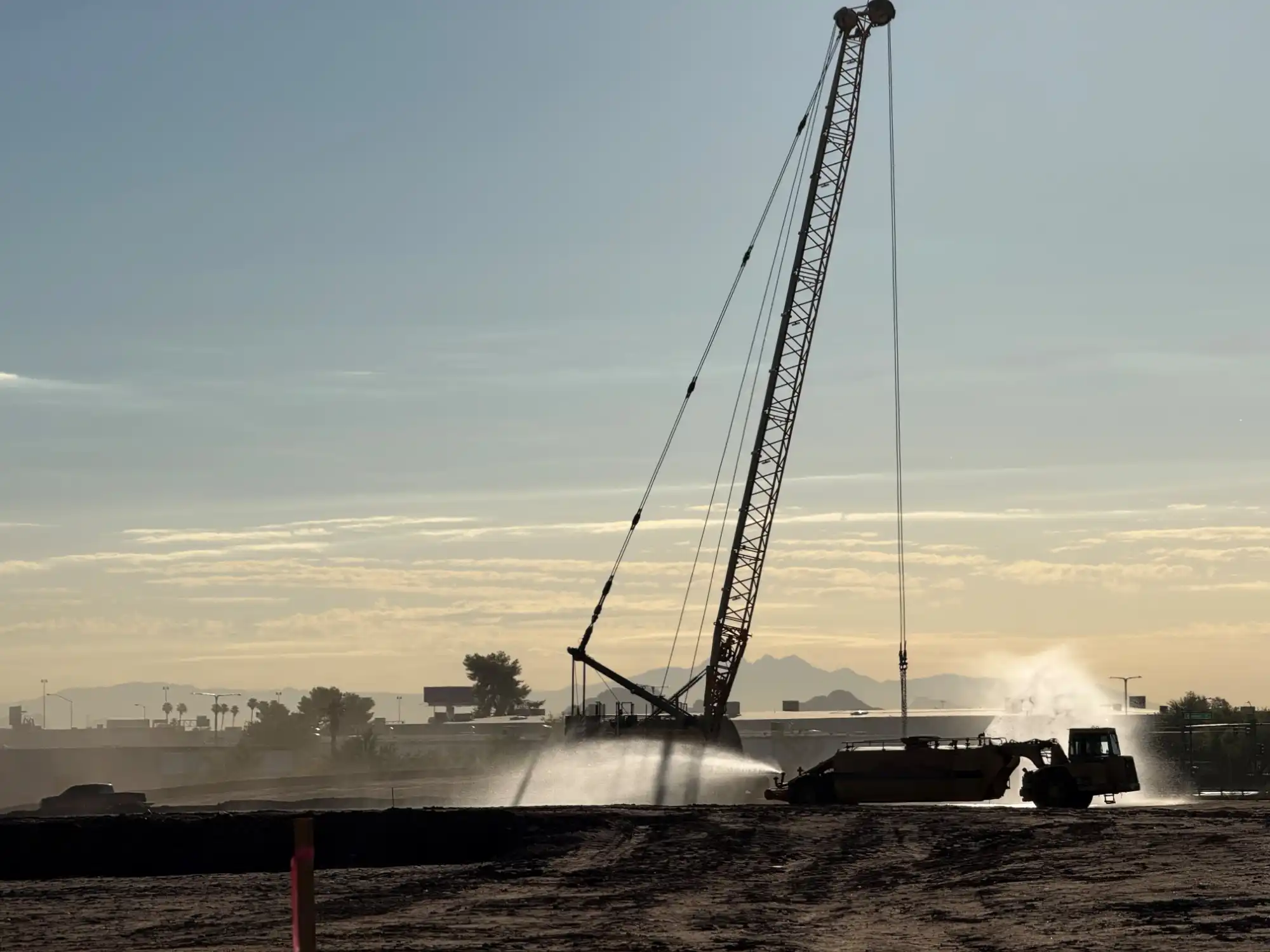
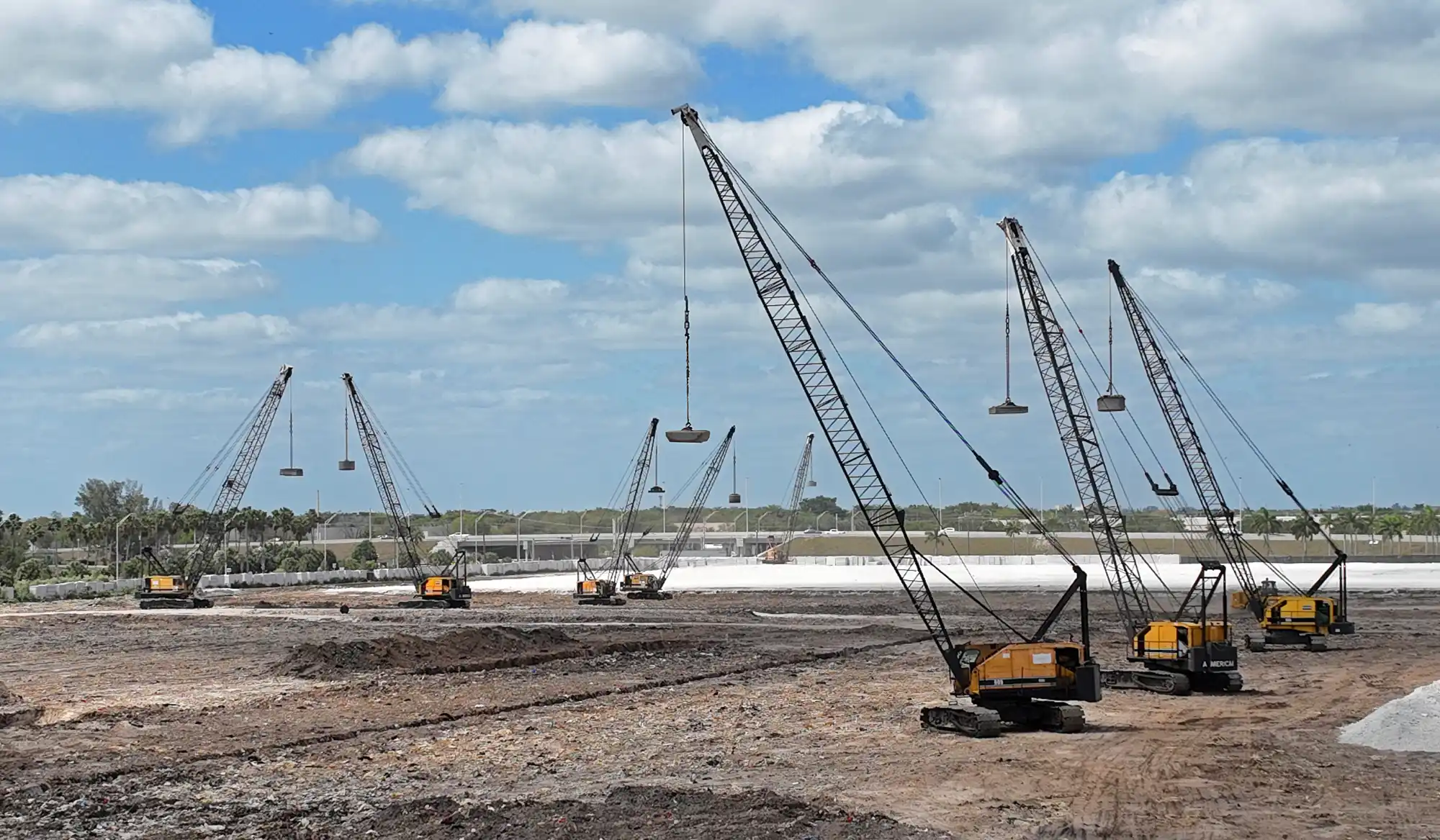
Dynamic compaction is the primary trigger for vibration monitoring. The technique involves repeatedly dropping heavy weights from heights of 60 to 100 feet, creating shock waves that compact weak soils to substantial depths. Each impact generates strong vibration.
Experienced monitoring teams establish sensor arrays around the impact zone before compaction begins. As work progresses, baseline vibration data informs decisions about drop heights, spacing, and sequence. Engineers might start with conservative drop parameters and increase intensity gradually, monitoring response to ensure adjacent structures remain safe. This adaptive approach optimizes compaction results while maintaining safety margins.
Adjacent Structures and Infrastructure
When compaction work occurs near buildings, bridges, or utilities, monitoring becomes even more critical. Sensors are positioned at structure foundations and at intermediate distances to track how vibration propagates through soil. Historic buildings or structures on poor foundations might require conservative limits and continuous monitoring throughout work.
Utilities require special attention. Underground pipelines, electrical conduits, and telecommunications lines are vulnerable to settlement and vibration damage. Baseline vibration measurements establish safe operating parameters.
Underground Utilities and Sensitive Areas
In urban environments, underground utilities are everywhere. Vibration monitoring near utility corridors requires coordination with utility owners and careful sensor placement. Some projects deploy sensors directly above pipelines to detect vibration transmission. Environmental monitoring might be required in areas with sensitive ecology.
Standards and Best Practices for Vibration Monitoring
Industry standards provide frameworks for consistent, reliable vibration monitoring across diverse projects.
Industry Standards and Compliance
ASTM International standards define measurement protocols and acceptable vibration limits for different scenarios. USBM RI 8507, a classic reference from the U.S. Bureau of Mines, provides guidance on vibration from blasting and ground improvement operations. State and local building codes often reference these standards or establish their own limits.
Most standards emphasize that vibration effects depend on the receiving structure. Historic masonry buildings require lower limits (typically 0.5 to 1.0 inches per second PPV) than modern reinforced structures (typically 1.0 to 2.0 inches per second or higher). Some standards account for vibration frequency, recognizing that low-frequency vibrations at certain frequencies cause more damage than higher-frequency vibrations of the same amplitude.
Site-Specific Protocols
Professional vibration monitoring teams conduct pre-work site assessments. They identify nearby structures, document baseline conditions, and establish project-specific vibration limits in consultation with engineers, property owners, and regulatory agencies. Site-specific protocols ensure that monitoring addresses actual project risks rather than applying generic limits everywhere.
Baseline monitoring before work begins creates a reference point. Post-work monitoring verifies that operations stayed within limits and provides documentation of project compliance.
Partnering with Vibration Monitoring Experts
Construction vibration monitoring is a specialized service requiring experienced professionals. Your monitoring partner should have deep expertise in ground improvement techniques, structural engineering knowledge, and sophisticated equipment.
Densification’s comprehensive vibration monitoring capabilities are designed specifically for ground improvement projects. We combine precision equipment with experienced field teams and advanced software analysis. Our approach emphasizes safety, regulatory compliance, and optimizing project results through real-time data feedback.
Long-term partnerships matter in ground improvement. Projects often evolve, conditions change, and decision-making benefits from continuity and deep site knowledge. Professional monitoring partners who understand your projects, your risk tolerance, and your goals deliver more value than generic monitoring contractors.
Frequently Asked Questions
What is construction vibration monitoring?
Construction vibration monitoring is the continuous measurement and analysis of ground vibrations during construction operations like dynamic compaction. Sensors detect ground movement, data acquisition systems record the signals, and software analyzes results in real-time. The goal is to ensure that construction work stays within safe vibration limits that protect nearby structures, utilities, and the environment.
Why is vibration monitoring necessary during ground improvement?
Ground improvement operations like dynamic compaction generate powerful vibrations that can damage nearby structures, compromise utilities, and create regulatory compliance issues. Vibration monitoring transforms this risk into measurable data, allowing engineers to optimize work while protecting everything around the project site.
What is peak particle velocity (PPV)?
Peak particle velocity measures the fastest ground movement during vibration events, expressed in inches per second. PPV is the standard metric for evaluating vibration effects. Different structures have different safe PPV limits. Historic masonry buildings typically tolerate 0.5 to 1.0 inches per second, while modern reinforced structures can handle higher levels.
How far does construction vibration travel?
Vibration attenuates with distance, but it can propagate hundreds of feet depending on soil conditions, vibration amplitude, and frequency. Soft soils transmit vibration farther than stiff soils. Sensor arrays at different distances help engineers understand site-specific vibration propagation patterns and identify structures requiring special protection.
What equipment is needed for vibration monitoring?
Essential equipment includes tri-axial accelerometers (sensors), data acquisition systems, wireless transmission capability, and monitoring software. Professional systems also include power backup, weatherproof construction, and remote monitoring capability. The specific equipment depends on project requirements, site conditions, and regulatory requirements.
How do I choose the right vibration monitoring provider?
Select a provider with experience in your type of ground improvement work, demonstrated expertise in vibration standards and protocols, reliable equipment, experienced field teams, and capability for real-time remote monitoring. References from similar projects and a clear understanding of your project-specific risks and regulatory requirements are essential.