What Is the Purpose of Ground Improvement in Construction?
The purpose of ground improvement in construction is to strengthen weak soils so they can safely support structures. It increases soil bearing capacity, controls settlement, and lowers structural risk. Without it, building on poor ground leads to cost overruns, delays, and long-term damage. For geotechnical engineers, contractors, and project owners, ground improvement before building is often the smartest and most affordable first step.
Why Ground Conditions Matter
Soil supports everything built on top of it. When it is too loose, too soft, or too compressible, it fails under load.
The results are costly:
- Excessive settlements — structures sink unevenly over time
- Bearing capacity failure — soil gives way under structural load
- Liquefaction — loose, saturated soils lose strength during earthquakes
- Budget overruns — poor ground found late in a construction project is expensive to fix
Ground improvement before building addresses these problems early — before they become emergencies on the job site.
What Ground Improvement Does
Ground improvement changes the physical properties of soil to make it stronger and more stable. Depending on the method used, it can:
- Increase soil bearing capacity
- Reduce settlement under buildings, slabs, and pavements
- Improve drainage and lower pore water pressure
- Densify loose soils to prevent shifting or collapse
- Lower liquefaction risk in seismic zones
- Prepare brownfield and reclaimed land for new construction
The goal is always the same: turn unreliable ground into a verified, stable foundation.
Common Ground Improvement Methods for Construction
Different soils need different solutions. Here are the most widely used ground improvement methods for construction:
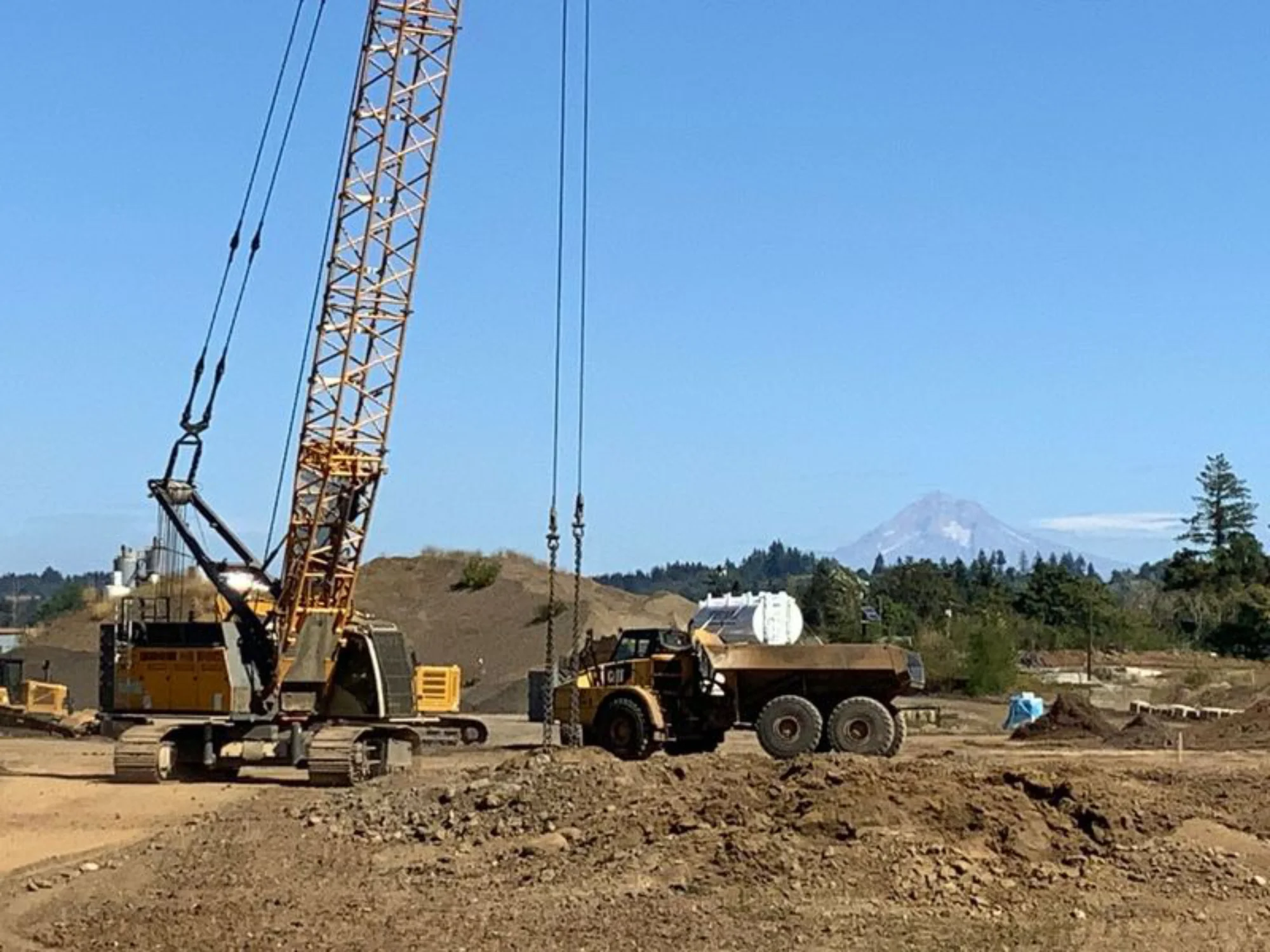
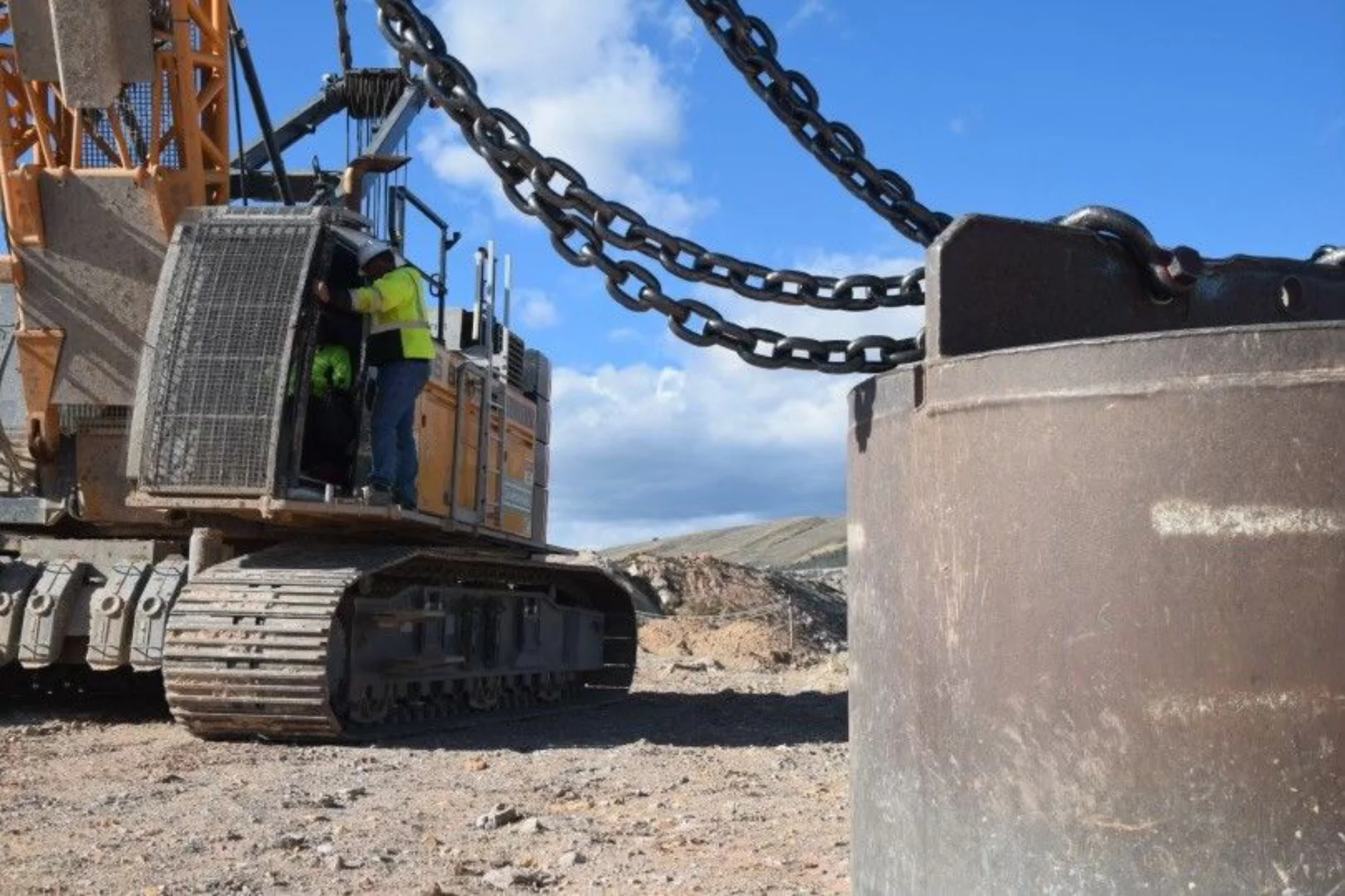
Dynamic Compaction: A heavy tamper drops repeatedly from a crane to densify loose soils and fills. Dynamic compaction ground improvement is fast, cost-effective, and produces results verified through field testing. Best for: loose sands, rubble fills, hydraulic fills, and mine spoils.
Stone Columns: Compacted stone columns transfer structural loads through soft soils to deeper, stronger layers. This is a proven ground improvement technique for cohesive soils with low bearing capacity.
Vibro Compaction: A vibrating probe densifies loose granular soils in place. Vibro compaction works well on large areas of uniform sandy soils requiring deep treatment.
Aggregate Piers: Short, stiff columns of compacted stone reinforce soft or loose soils under foundations and floor slabs. They deliver increased bearing capacity and reduced settlement.
Deep Soil Mixing: Cement or lime mixes directly into weak soils to create a stronger material. This is one of the most effective soil stabilization techniques for soft clays and organic soils.
Jet Grouting: High-pressure grout forms solid columns in the ground. Jet grouting suits mixed soils, karst conditions, and sites with tight access.
Surcharge and Preloading: A temporary load compresses soft soils before construction begins. This method works best on large sites where the schedule allows time for the preloading period.
Each method has trade-offs in cost, depth, and speed. A thorough geotechnical investigation determines the right fit for each site.
Why Is Ground Improvement Needed?
Ground improvement in construction becomes necessary when site conditions create a risk for the project. Geotechnical engineers recommend it when:
- Borings reveal loose soil with low SPT values
- Settlement analysis shows unacceptable movement under design loads
- The site contains uncontrolled fills, rubble, or waste
- The project involves reclaimed land or hydraulic fill
- Liquefaction risk exists in a seismic zone
- The site was previously a landfill, quarry, or industrial facility
- Deep foundations are specified, but a cost-effective ground improvement alternative makes more sense
Finding these conditions early — during site investigation — saves significant time and money.
Ground Improvement vs. Deep Foundations
The most common geotechnical decision is whether to improve the existing ground or bypass it with deep foundations. Both work. The right choice depends on soil type, structural loads, schedule, and budget.
On sites with loose soils, cost-effective ground improvement — especially dynamic compaction — can cut foundation costs by 30–60% while meeting the same structural requirements.
Choosing the Right Soil Stabilization Technique
Improving soils requires matching the method to the site. Geotechnical engineers evaluate:
- Soil type — granular soils respond to compaction; cohesive soils need mixing or column support
- Treatment depth — methods vary widely in how deep they reach
- Structural loads — heavier loads require greater soil bearing capacity improvement
- Schedule — some methods complete in days; others take months
- Site constraints — nearby structures, utilities, and access affect which methods are practical
- Budget — the best geotechnical ground improvement solutions balance performance with project economics
No single stabilizing technique fits every construction site. Soil improvement programs are always designed around specific site conditions.
The Geotechnical Engineer’s Role
Geotechnical engineers lead every ground improvement decision. They:
- Investigate and characterize site soils
- Select and design the improvement program
- Specify measurable target criteria
- Oversee quality control in the field
- Confirm post-treatment results meet design requirements
Projects run best when geotechnical expertise is engaged during planning — not after problems surface during construction.
Verifying Ground Improvement Results
One key advantage of professional ground improvement is that results are measurable before construction starts.
Common verification methods:
- SPT (Standard Penetration Test) — measures soil resistance before and after treatment
- CPT (Cone Penetration Test) — produces a continuous soil strength profile
- Plate Load Testing — directly measures surface bearing capacity
- Settlement Monitoring — tracks ground movement during and after treatment
Pre- and post-treatment data confirm the ground meets design criteria. That documentation protects owners, lenders, and design teams throughout the project.
Why Specialization Matters in a Ground Improvement Contractor
Weak soil solutions for construction are only as good as the contractor delivering them. Specialized firms produce better-engineered programs and tighter quality control than generalist contractors.
Densification, Inc. has focused exclusively on dynamic compaction ground improvement since 1993. With more than 1,000 completed projects across the U.S., Alaska, and the Caribbean, Densification is among the most experienced ground improvement contractors in North America.
What clients get with Densification:
- Specialized focus — dynamic compaction is the only discipline
- Turnkey delivery — design, operations, quality control, and reporting in one place
- Engineered programs — designed to each site’s specific conditions
- Verified results — before-and-after field data on every project
- 30+ years of trusted relationships with engineers, contractors, and owners across North America
View completed projects → Learn about our services →
Frequently Asked Questions
What is the purpose of ground improvement in construction? It increases soil bearing capacity, controls settlement, and reduces structural risk — converting weak ground into a safe, stable foundation.
Why is ground improvement needed before building? Poor soil conditions cause settlement, foundation failure, and budget overruns. Addressing them before construction eliminates risk and creates a predictable foundation.
What are the most common ground improvement methods? Dynamic compaction, stone columns, vibro compaction, aggregate piers, deep soil mixing, jet grouting, and surcharge preloading are the most widely used. The right method depends on soil type and project requirements.
Can ground improvement replace deep foundations? On sites with loose granular soils, yes. Ground improvement often eliminates the need for deep foundation systems entirely — at lower cost and with faster execution.
Conclusion
Weak soils create real risks: settlement, structural failure, and budget overruns. The right ground improvement method — properly designed and verified — eliminates those risks before they affect your project.
Densification, Inc. has delivered those results since 1993 on 1,300 projects across North America and the Caribbean.