The Ultimate Guide to Dynamic Compaction for Ground Improvement
Dynamic compaction is a ground improvement technique that densifies loose or weak soils using a heavy weight dropped repeatedly from a crane. It increases bearing capacity, reduces settlement, and creates stable ground for construction. For geotechnical engineers, general contractors, and project owners dealing with poor ground conditions, it is one of the most cost-effective and sustainable ground improvement solutions available.
What Is Dynamic Compaction?
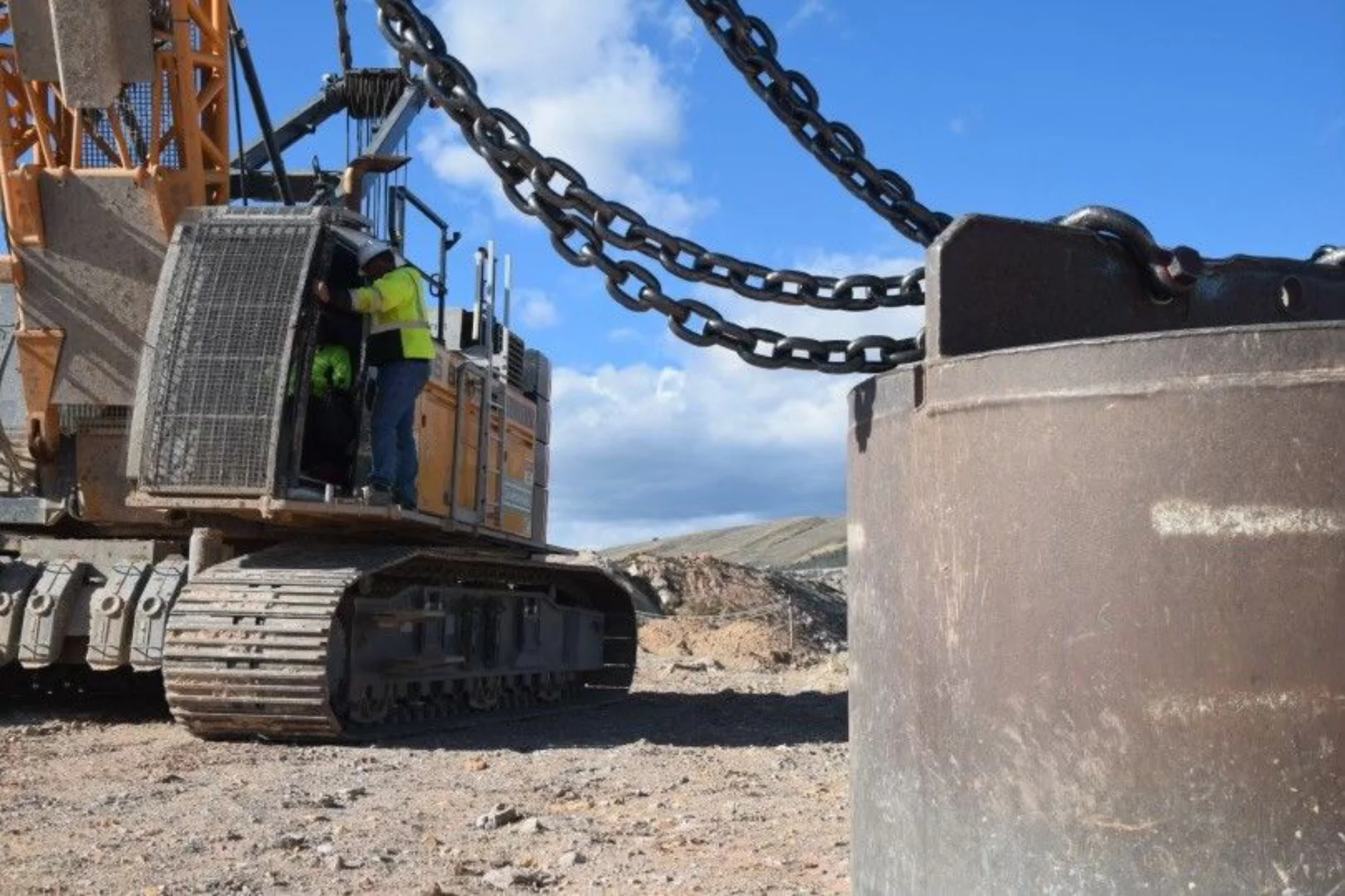
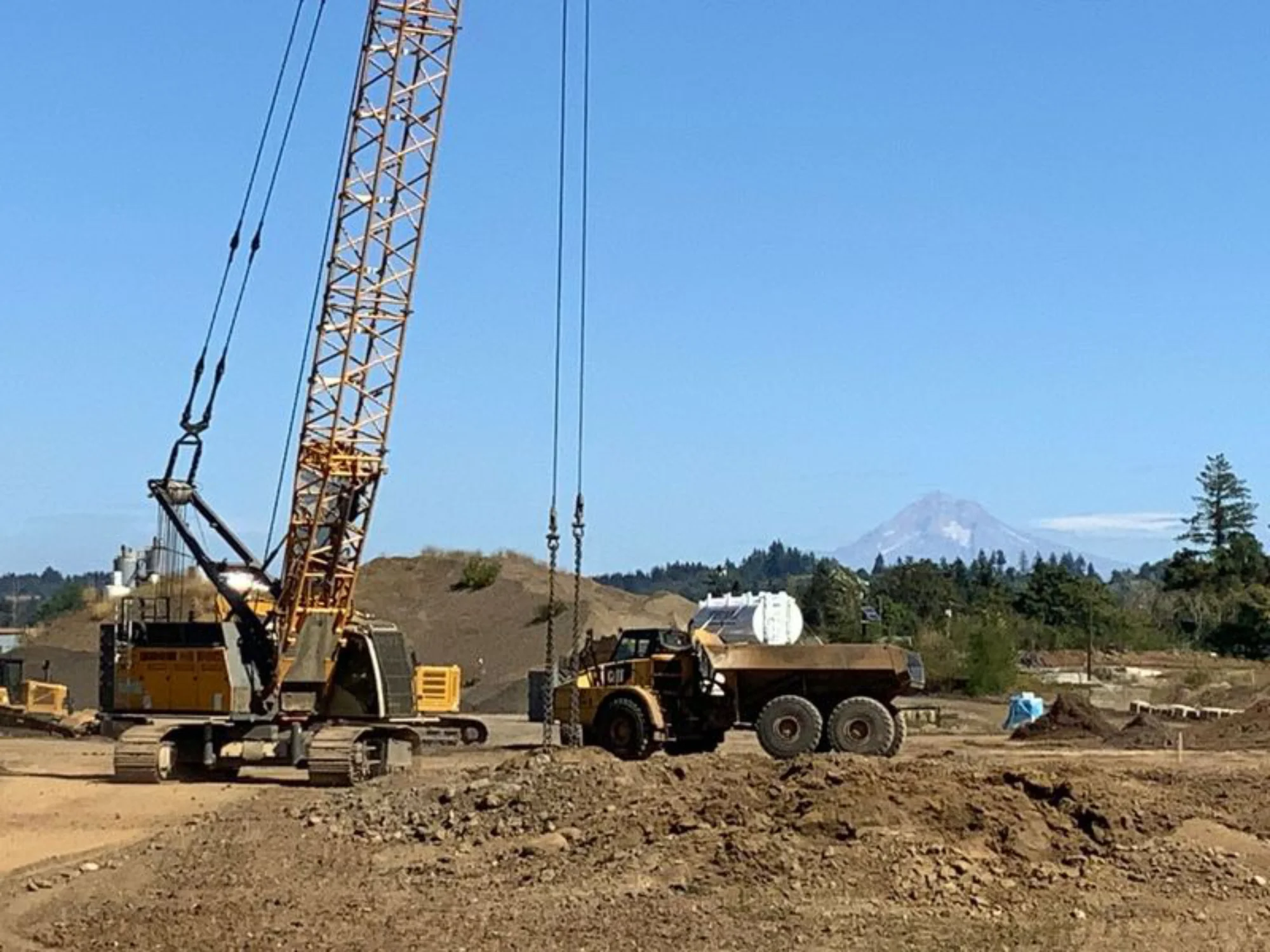
Dynamic compaction uses a steel or concrete tamper — typically 10 to 40 tons — dropped from heights of 30 to 100 feet. Each impact sends energy deep into the soil, collapsing voids and increasing density.
The process follows a controlled grid pattern across the treatment area. Crews perform multiple passes, finishing with a surface “ironing pass” for uniform results.
Which Soils Respond Best to Dynamic Compaction?
Dynamic compaction works best in granular and partially saturated soils. It is one of the most reliable loose soil treatment methods for the following conditions:
Best-fit soil types:
- Loose sands and gravels
- Uncontrolled or hydraulic fills
- Mine spoils and rubble fills
- Collapsible soils
- Municipal solid waste sites
- Partially saturated silts
Less effective in:
- Fully saturated soft clays
- Sites with tight vibration limits near existing structures
A geotechnical investigation — borings, SPT, CPT, and lab testing — should always come first before selecting any ground improvement method.
Dynamic Compaction vs. Other Ground Improvement Methods
Dynamic compaction is not the right fit for every project. But it offers advantages that few other ground improvement techniques can match.
| Method | Best For | Cost | Depth |
| Dynamic Compaction | Loose soils, granular fills | Low–Moderate | 15–40 ft |
| Surcharge / Preloading | Soft clays | Low | Variable |
| Stone Columns | Cohesive soils | Moderate–High | 30–60 ft |
| Deep Soil Mixing | Soft clays, organics | High | 30–80 ft |
| Jet Grouting | Voids, mixed soils | High | Variable |
| Deep Foundations | All soil types | Very High | Any |
Dynamic compaction stands out for:
- Speed — large areas treated in days or weeks
- Low cost — no imported materials; equipment is the main expense
- Verification — results confirmed through post-treatment SPT and CPT testing
- Sustainability — no chemicals or grouts introduced into the ground
On loose granular sites, dynamic compaction often cuts foundation costs by 30–60% compared to deep foundations.
The Dynamic Compaction Process: Step by Step
Step 1 — Geotechnical Investigation
Borings, SPT/CPT testing, and lab analysis define the soil profile and guide program design.
Step 2 — Program Design
Engineers specify tamper weight, drop height, grid pattern, and target improvement criteria — typically a minimum SPT blow count or CPT resistance.
Step 3 — Trial Section
A test section validates the design under real field conditions before full-scale treatment begins.
Step 4 — Production Compaction
Treatment proceeds in a systematic grid. Operators monitor blow counts and crater depths in real time. Quality control records document every drop point.
Step 5 — Post-Treatment Testing
After a waiting period for pore pressures to dissipate, SPT or CPT testing confirms the ground has met design criteria.
Step 6 — Final Report
A complete project report documents the treatment program and all verification data — a permanent part of the geotechnical record.
Key Benefits for Contractors and Project Owners
Cost Savings
- Lower cost per square foot than deep foundations
- Reduces or eliminates over-excavation and recompaction
- Faster schedules reduce financing and overhead costs
Technical Performance
- Measurably increases ground stability and bearing capacity
- Improves compact soils to depths of 15–40 feet
- Results verified through independent testing
Sustainability
- No chemical additives or foreign materials
- Lower carbon footprint than concrete-intensive systems
- Supports green building and responsible construction goals
Risk Reduction
- Converts unpredictable loose soils into engineered, tested fill
- Documented results give owners and lenders confidence
- Over 50 years of proven performance on thousands of projects worldwide
When to Specify Dynamic Compaction
Geotechnical engineers should evaluate dynamic compaction when project requirements include any of the following:
- Uncontrolled fills, mine waste, or demolition debris on site
- SPT values below 10–15 blows per foot in borings
- Land reclamation or hydraulic fill conditions
- Settlement risk under proposed structural loads
- Need for cost-effective ground improvement for construction
- Prior site use as a landfill, quarry, or industrial facility
- Seismic zones where liquefaction mitigation is required
Engage a specialist early — during design, not after. Early involvement allows the program to be optimized and avoids costly redesigns.
Specialized Applications
Infrastructure Projects: Highways, bridge approaches, rail corridors, and airport aprons often involve loose granular subgrades. Dynamic compaction treats large areas quickly at a fraction of the cost of deep foundations.
Industrial and Commercial Development: Warehouses and logistics centers need uniform, high-capacity floor slabs. Dynamic compaction eliminates differential settlement on sites with variable fill.
Coastal and Port Development: Hydraulic fills and reclaimed land respond exceptionally well to dynamic compaction — making it a go-to ground improvement solution for port expansions and coastal infrastructure.
Landfill Redevelopment: Brownfield and former landfill sites present extreme ground conditions. Dynamic compaction, sometimes combined with other improvement techniques, has successfully prepared these sites for new construction.
Seismic Risk Mitigation: Loose, saturated sands are prone to liquefaction during earthquakes. Dynamic compaction densifies these soils and dramatically reduces seismic risk.
Caribbean and Remote Projects: Where importing deep foundation materials is expensive or impractical, dynamic compaction offers a clear cost advantage. Equipment mobilization replaces material-heavy alternatives.
What to Look for in a Dynamic Compaction Contractor
Selecting the right contractor matters as much as selecting the right method. Evaluate these criteria:
Proven Experience: Look for a strong portfolio across diverse soil types and project categories. Years in the field translate into better design, fewer surprises, and more reliable outcomes.
Engineering Capability: The firm should employ geotechnical engineers who design the program, interpret test results, and adapt as conditions evolve in the field.
Quality Control Standards: Ask to see sample QC reports. Systematic pre- and post-treatment testing, real-time monitoring, and complete documentation are non-negotiable on any professional dynamic compaction project.
Turnkey Delivery: A single contractor managing design, operations, quality control, and reporting simplifies accountability and reduces coordination risk.
Why Engineers and Contractors Trust Densification, Inc.
Densification, Inc. has specialized in dynamic compaction since 1993. With more than 1,300 completed projects across the U.S., Alaska, and the Caribbean, the company brings a level of focused expertise that generalist contractors simply cannot match.
What makes Densification different:
- 30+ years of specialization — dynamic compaction is not one service among many; it is the entire focus
- Turnkey solutions — program design through final verification report, all under one roof
- Engineered programs — every project is designed to site-specific conditions, not templated
- Verified results — measurable before-and-after improvement data on every project
- Trusted relationships — repeat clients across the geotechnical, contracting, and development sectors
View our project portfolio → Learn about our services →
Frequently Asked Questions
How deep does dynamic compaction improve soil? Typical improvement depths range from 15 to 30 feet. Heavier weights dropped from greater heights push energy further into the ground.
How long does a project take? Most projects are completed within one to four weeks of mobilization — significantly faster than many alternative ground improvement methods.
Can it work on saturated soils? It works best in granular soils. Saturated fine-grained soils require careful evaluation. A phased approach with waiting periods between passes is often used.
How is improvement verified? SPT and CPT testing before and after treatment confirm results. Data is compared directly to pre-treatment baselines and project specifications.
What about vibration near existing structures? Vibration monitoring is standard practice. Program design accounts for nearby structures by adjusting drop energy, spacing, and sequencing.
Conclusion
Unstable soils don’t have to stop a project. Dynamic compaction turns loose, unpredictable ground into verified, stable foundations — faster and more affordably than most alternatives. For geotechnical engineers specifying ground improvement methods, contractors managing challenging site conditions, and owners protecting long-term investments, it delivers measurable results that stand up to independent testing.
Densification, Inc. has applied this standard of performance on 1,300 projects since 1993. The experience is there. So is the equipment, the engineering, and the track record.