How Deep Dynamic Compaction Transforms Weak Soils into Stable Foundations
Introduction
Deep dynamic compaction transforms weak soils into stable foundations by using high-energy impacts to increase soil density, reduce settlement, and strengthen the ground for construction. This proven ground improvement method enhances bearing capacity, corrects loose or disturbed soils, and helps project teams achieve reliable performance in challenging subsurface conditions. At Densification, we use more than three decades of field expertise to deliver deep dynamic compaction solutions that support safe, predictable, and cost effective development across North America.
What Deep Dynamic Compaction Is and How It Works
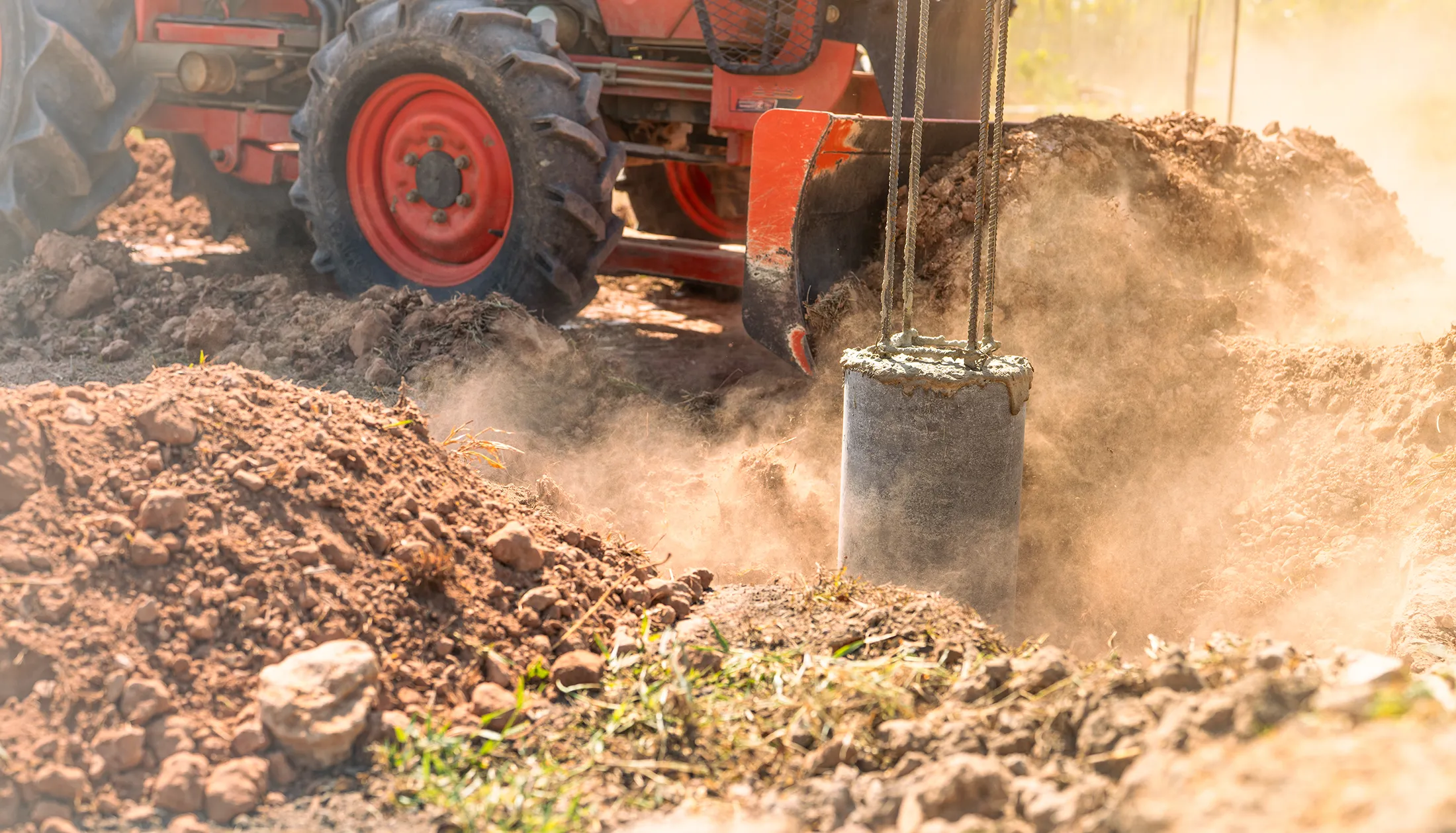
Deep dynamic compaction improves soil by dropping heavy weights from controlled heights to create powerful energy waves that travel into the ground. These waves rearrange soil particles, collapse weak voids, and densify materials at depth. Unlike shallow improvement techniques, deep dynamic compaction is designed for large sites, thick uncontrolled fills, collapsible soils, and areas impacted by past industrial activities.
Key elements of the process:
- Drop weights typically range from 10 to 30 tons
- Drop heights vary based on soil characteristics and project requirements
- Energy is applied in grids that allow systematic treatment of large areas
- Successive passes continue to improve deeper layers and refine density
This method offers flexibility for engineers and contractors seeking predictable ground improvement on diverse soil profiles.
Why Deep Dynamic Compaction Is Ideal for Weak or Variable Soils
Many construction sites face unpredictable soil conditions that create risk for settlement, differential movement, and foundation instability. Deep dynamic compaction addresses these risks by improving soil behavior across wide treatment zones.
It is especially effective for:
- Loose granular soils
- Thick uncontrolled fills
- Collapsible or disturbed soils
- Land reclaimed from industrial use
- Sites with buried debris or unpredictable layering
By increasing density and reducing compressibility, dynamic compaction creates ground that is better suited for building loads, pavements, tanks, warehouses, and transportation infrastructure.
How Deep Dynamic Compaction Improves Load-Bearing Capacity
As soils densify, their ability to support structural loads increases. The compaction process reduces void space and enhances particle interlock, which leads to improved shear strength and stiffness in the treated zone.
Improvements include:
- Higher allowable bearing pressures
- Reduced long-term settlement risk
- More uniform ground conditions
- Enhanced lateral stability for retaining systems
- Better performance under cyclic and dynamic loads
These outcomes help engineers design more efficient foundations and deliver safer, more predictable structures.
Settlement Reduction and Long-Term Performance Benefits
Settlement risk is one of the biggest challenges on sites with weak soils. Deep dynamic compaction significantly reduces both immediate and long-term settlement by consolidating loose soil layers and eliminating voids that would otherwise compress under building loads.
Benefits include:
- Reduced differential settlement
- Decreased need for overexcavation or soil replacement
- Lower risk of slab cracking or structural distortion
- Improved pavement performance over time
These long-term gains support the financial and operational goals of project owners who want predictable performance throughout the life of the structure.
Environmental and Cost Advantages of Deep Dynamic Compaction
Deep dynamic compaction is a sustainable ground improvement method. It strengthens soil in place rather than requiring excavation, hauling, and importing of structural fill. This reduces both cost and environmental impact.
Advantages include:
- Lower construction costs compared to soil removal and replacement
- Minimal material waste
- Reduced carbon footprint from fewer haul trucks
- Ability to reuse challenging or contaminated sites after proper remediation
- Faster project timelines for large-scale treatment zones
For developers seeking cost savings with reliable results, deep dynamic compaction is a practical and environmentally aligned solution.
How Densification Controls Safety and Quality During Dynamic Compaction
Dynamic compaction requires careful planning and detailed monitoring to ensure both safety and performance. Densification approaches each project with precision, using advanced field controls and experienced crews to manage risk.
Our safety and quality measures include:
- Detailed pre-construction assessments
- Vibration monitoring to protect nearby structures
- On-site engineering oversight
- Continuous data tracking to confirm soil response
- Documentation that verifies the achievement of design criteria
Our turnkey delivery model allows project teams to trust that every phase of compaction is executed with care and technical accuracy.
Why Deep Dynamic Compaction Supports Successful Development Projects
Whether preparing a site for warehouses, industrial facilities, transportation infrastructure, or commercial buildings, deep dynamic compaction provides a strong foundation for long-term success. It mitigates soil risks early, improves constructability, and supports efficient foundation design.
Project teams benefit from:
- Predictable soil performance
- Reduced need for deep foundations
- Improved reliability on large or complex sites
- Lower long-term maintenance costs
With more than 1,000 successful projects completed, Densification offers proven expertise for turning difficult soil conditions into buildable, stable ground.
Understanding Soil Behavior Before and After Deep Dynamic Compaction
Before deep dynamic compaction begins, engineers conduct a thorough evaluation of the soil profile to understand moisture content, density, layering, and potential variability across the site. This baseline information allows teams to predict how soils will respond to high-energy impacts. After treatment, post improvement testing, such as dynamic cone penetration tests, settlement monitoring, or geotechnical verification survey,s confirms that the soil has reached the target density and performance criteria. This before-and-after approach ensures that the compaction process delivers measurable improvements aligned with engineering expectations.
How Dynamic Compaction Supports Faster and More Efficient Construction
Weak or unpredictable soils often delay project schedules, especially when foundation redesigns or soil replacement are required. Deep dynamic compaction streamlines construction by improving soil performance early in the project timeline. Once the ground has been stabilized, contractors can mobilize sooner, foundations can be designed with greater confidence, and project owners face fewer unexpected challenges. The speed and scalability of dynamic compaction make it ideal for large commercial developments, industrial parks, ports, distribution centers, and public infrastructure.
The Value of Partnering with an Experienced Ground Improvement Team
Deep dynamic compaction is an effective method, but successful execution requires experience, detailed planning, and a strong understanding of soil behavior. Working with an experienced team like Densification provides project owners with confidence that the improvement program will be completed safely, efficiently, and to the highest technical standard. With decades of field data, advanced monitoring techniques, and a commitment to collaboration, Densification supports clients through every step of the process, from early feasibility evaluations to post-treatment verification.
Conclusion
Deep dynamic compaction transforms weak soils into stable foundations by increasing density, reducing settlement, and enhancing bearing capacity. For engineers, contractors, and project owners facing challenging site conditions, this method provides a safe, data-driven, and cost-effective path to building stability. Densification delivers deep dynamic compaction with technical precision and a commitment to long-term partnership, helping clients across North America create strong, sustainable ground for successful development. Fill out our contact form today.