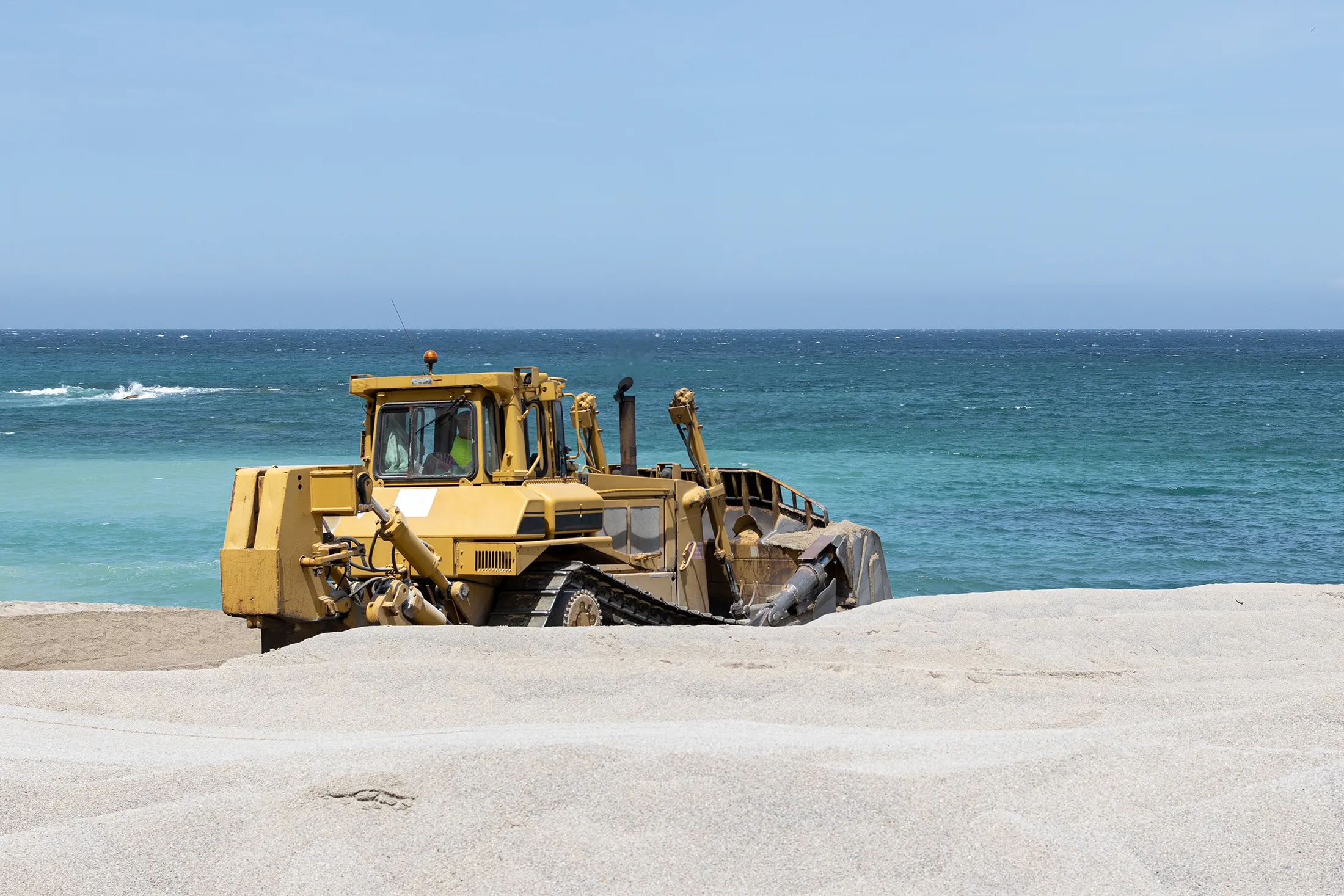
Deep Dynamic Compaction for Coastal Projects: Mitigating Liquefaction Risks
Introduction
Coastal regions present some of the toughest conditions for construction. High groundwater levels, loose sandy soils, and seismic activity make these areas likely to experience liquefaction. This is when soil temporarily loses its strength and acts like a liquid during an earthquake. When that happens, structures can tilt, settle unevenly, or even fail completely.
To prevent this, engineers use Deep Dynamic Compaction (DDC). This method improves the ground by making loose soils denser. It also strengthens the ground to resist liquefaction.
At Densification, Inc., we use DDC for many coastal projects. This includes ports, industrial sites, and reclaimed land. We help project owners ensure safety and stability in tough soil conditions.
1. Understanding Liquefaction in Coastal Soils
Liquefaction happens when wet, loose soils lose strength quickly. This can occur during events like an earthquake or vibration. When pore water pressure rises quickly, soil particles lose contact. This reduces their ability to support weight.
Coastal areas are especially at risk because they often contain:
- Loose sandy soils created by marine or river deposits
- High groundwater levels that keep the soil saturated
- Seismic or cyclic loading from waves, tides, or heavy machinery
- Reclaimed or artificially filled land that lacks proper compaction
Without ground improvement, liquefaction can cause serious settlement, slope instability, and foundation damage. That is why engineers use methods like DDC to prepare coastal soils before construction begins.
2. How Deep Dynamic Compaction Works
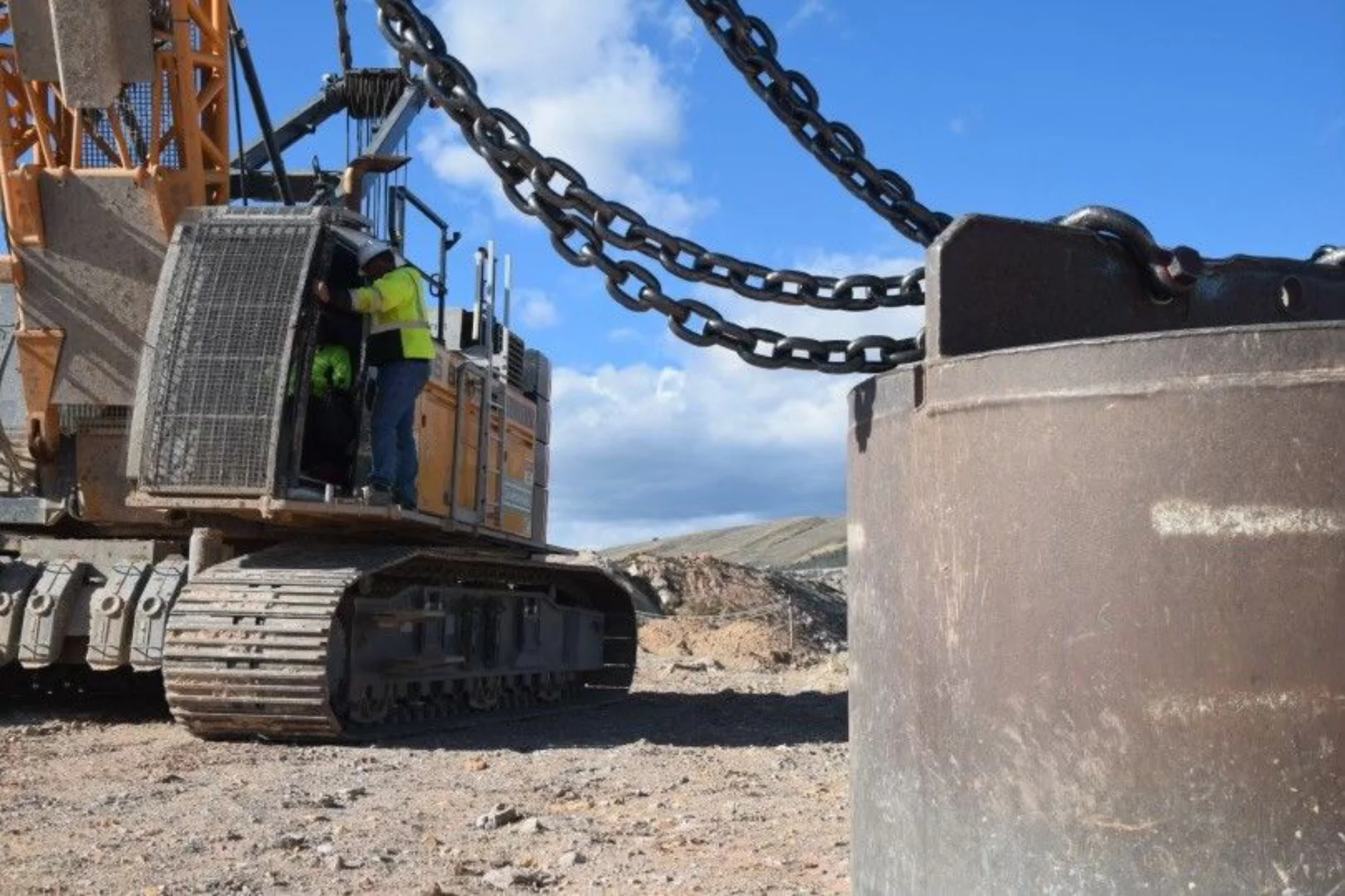
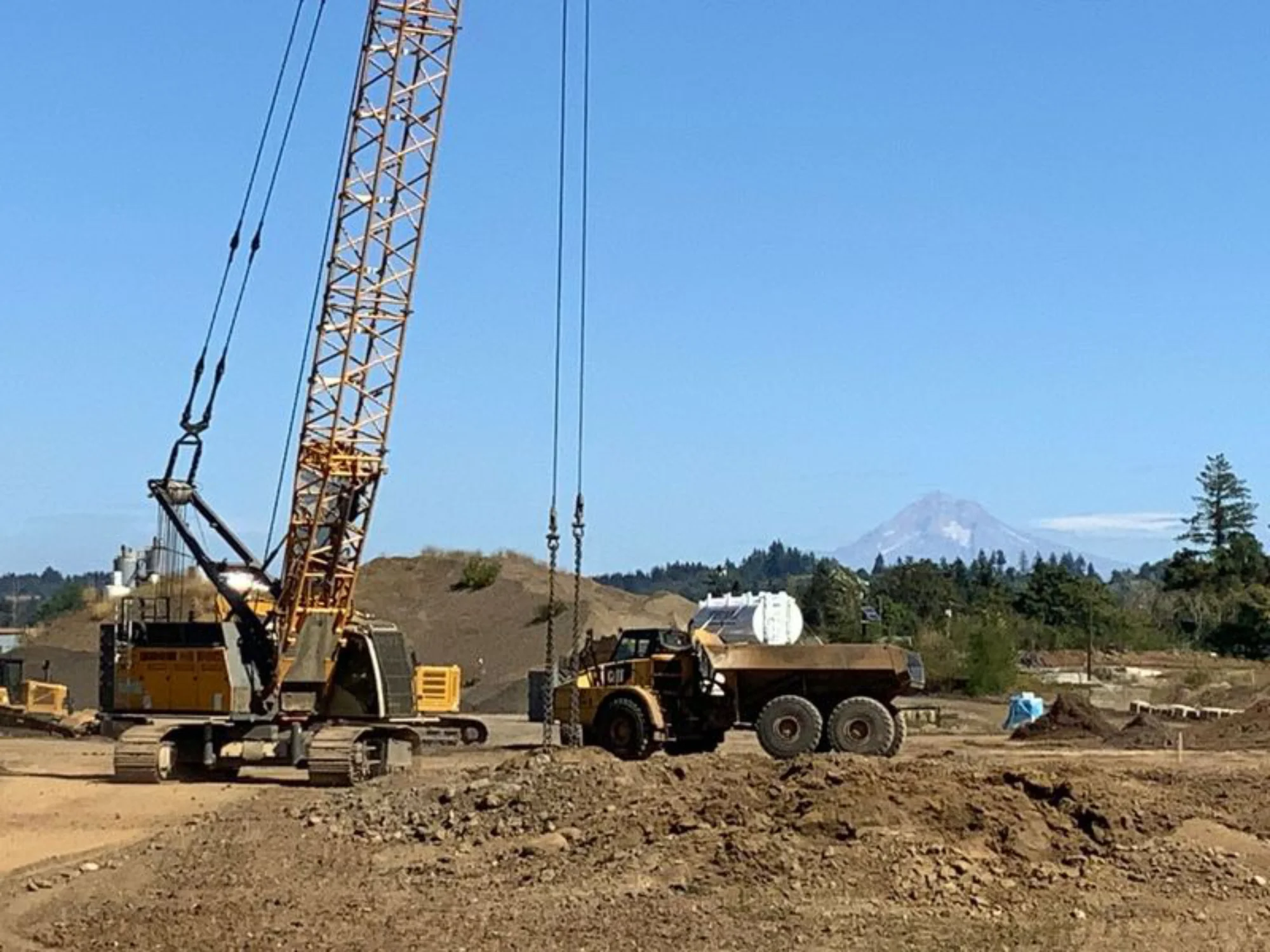
Deep Dynamic Compaction uses controlled impact energy to densify soil. It involves dropping a heavy weight, usually between 10 and 30 tons, from a specific height onto the ground. The energy from each drop compresses the soil, rearranging loose particles into a denser structure and forcing excess water out of the pores.
The process is carefully engineered to control how deep the energy travels and how much force is applied. Depending on the soil type, DDC can treat depths from 15 to more than 40 feet, making it one of the most effective deep-ground densification methods available.
Typical steps in a DDC project include:
- Site testing and modeling to determine soil behavior and energy needs
- Controlled weight drops at grid points to compact the soil evenly
- Secondary surface passes to level and refine the treated area
- Monitoring and verification using settlement and vibration data to confirm performance
This combination of accuracy and strength makes DDC a dependable option. It helps enhance soil density, stiffness, and strength in coastal regions.
3. Why DDC Works Well for Coastal Projects
Deep Dynamic Compaction works well in coastal and reclaimed areas. In these places, traditional foundation systems can be costly or hard to use. Its ability to improve deep sandy layers and control settlement makes it ideal for marine and waterfront construction.
Key benefits of DDC for coastal projects include:
- Liquefaction mitigation: DDC increases soil density, reducing the buildup of pore pressure during earthquakes.
- Higher bearing capacity: Stronger soils better support heavy loads like cranes, tanks, and port equipment.
- Cost efficiency: Compared to piling or grouting, DDC covers large areas more quickly and at lower cost.
- Environmental benefits: It requires no chemicals or imported fill, reducing waste and emissions.
- Flexibility: DDC can be used for new construction, redevelopment, or soil remediation.
Densification, Inc. has successfully implemented DDC across North America, including ports, container terminals, and industrial sites where soil reliability is essential.
4. Monitoring and Safety During DDC
Working near existing structures and marine environments demands precision and control. At Densification, Inc., safety is built into every stage of the compaction process.
Our engineers use:
- Vibration monitoring to protect nearby buildings and utilities
- Groundwater management to control pore pressure buildup
- Field testing and settlement surveys to confirm soil improvement
- Real-time data tracking for accurate performance verification
This attention to monitoring ensures that DDC meets engineering goals while maintaining environmental and safety standards.
5. Combining DDC with Other Ground Improvement Methods
In some cases, Deep Dynamic Compaction works best when paired with other improvement techniques. Combining methods helps address variable soil layers and site-specific challenges.
For example:
- DDC with predrainage can help release pore water pressure more effectively.
- Vibro replacement can strengthen weaker soil layers beneath the compacted zones.
- Grouting or soil mixing can improve fine-grained or soft soils where DDC is less effective.
Densification, Inc. uses different methods to give project teams custom, affordable foundation solutions. These solutions meet performance and budget goals.
6. Challenges of Working in Saturated Coastal Soils
Highly saturated soils are one of the biggest challenges in coastal construction. Water reduces soil strength, making traditional foundations less reliable. In these conditions, Deep Dynamic Compaction directly tackles the problem by rearranging soil particles and controlling pore water pressure.
Before applying DDC, engineers must carefully assess groundwater behavior. If pore pressure increases too much, stability can be temporarily reduced. To manage this, Densification uses staged compaction and drainage systems that let water escape safely during treatment.
This ensures the soil densifies evenly while minimizing risk to nearby structures and the environment.
7. Designing Energy Patterns for Coastal DDC Projects
The effectiveness of DDC depends on how energy is distributed during compaction. Engineers design specific drop patterns, spacing, and energy levels based on the soil type and site conditions.
For coastal projects, Densification, Inc. often uses a phased approach:
- Initial high-energy passes to densify deep layers
- Secondary light passes to refine surface uniformity and minimize settlement differences
This layered strategy strengthens both the deep foundation zones and upper soil layers. Controlled energy application also protects nearby pipelines, docks, and utilities while achieving reliable soil improvement.
8. Case Studies: DDC Success in Coastal Projects
Densification, Inc. has completed many successful DDC projects across coastal regions in the United States and the Caribbean.
In one project, a marine terminal redevelopment required densifying reclaimed sandy fill to a depth of 30 feet. The densification team improved energy patterns and vibration control. They achieved over a 60 percent reduction in settlement and ensured safe conditions for heavy equipment.
In another project, a coastal logistics hub was built on loose, water-saturated soils. Using DDC, engineers improved bearing capacity to support new warehouse structures while maintaining compliance with strict environmental standards.
These examples show how DDC consistently delivers durable, long-term soil stability in complex coastal environments.
9. Environmental Considerations and Sustainability
Sustainability is an important factor in modern coastal construction. Deep Dynamic Compaction is an environmentally friendly option because it strengthens the ground without adding chemicals or extra materials.
By compacting the soil in place, DDC reduces waste, trucking, and emissions. Densification, Inc. also uses advanced monitoring to control noise and vibration, ensuring compliance with marine and environmental regulations.
Compared to piling or grouting, DDC provides a cleaner, lower-impact way to achieve strong foundations while protecting surrounding ecosystems.
Conclusion
Coastal construction requires solutions that are both strong and sustainable. Deep Dynamic Compaction offers a cost-effective and proven way to reduce liquefaction risk and improve long-term soil performance.
Densification, Inc. has over 30 years of experience. They have successfully used DDC at ports, industrial sites, and infrastructure projects in North America. From design to completion, our focus is precision, safety, and lasting results.
To learn how DDC can support your next coastal project, visit densification.com/contact/ or speak with one of our engineers today.